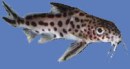
Photos © Sean Evans
|
| Common name: | Common plec / pleco, Suckermouth catfish |
| Scientific name: | Pterygoplichthys spp. (see below), Hypostomus punctatus and others! |
| Synonyms: | Plecostomus punctatus |
| Size: | Pterygoplichthys spp - 16-20" (40-50cm), H. punctatus - up to 12" (30cm) |
| Origin: | South America |
| Recommended tank size: | 120 x 45cm (48 x 18") or larger. |
| Tank setup: | A large tank with robust decor such as bogwood for refuges. |
| Compatibility: | Generally OK for the larger community tank, may be territorial over a favourite cave. Mixes well with
larger cichlids where more delicate suckermouth catfish might not be suitable. |
| Temperature: | 19-26oC (66-79oF) |
| Water chemistry: | Not critical, tolerates a wide range of pH and hardness values. |
| Feeding: | A good algae eater, this should be supplemented with algae wafers, sinking pellets, green foods.
They will also consume most other foods missed by midwater dwelling fish. |
| Sexing: | No obvious differences. Adult males may be smaller than females. |
| Breeding: | Unlikely in the aquarium - accomplished in outdoor ponds in warmer climates, where the fish dig tunnels in which to spawn. |
| Comments: |
This fish is a very hardworking algae eater. Unfortunately its large size and 'clumsyness'
tend to make it less suitable for small or heavily planted tanks. It is a very robust fish which will
adapt to most conditions.
The common name of "plec" or "pleco" is derived from the obsolete genus name of Plecostomus.
A number of different species are often sold under the name of "common plec", usually Pterygoplichthys spp, including Pterygoplichthys disjunctivus, multiradiatus and pardalis (previously known as Liposarcus spp).
The Sailfin plec, Pterygoplichthys gibbiceps, may also be sold as a 'common plec' occasionally, but this species is more easily recognizable by its larger dorsal fin and a more 'honeycomb' type pattern.
|